How to Use an AI SEO Content Brief Generator (And Why You Need One in 2026)
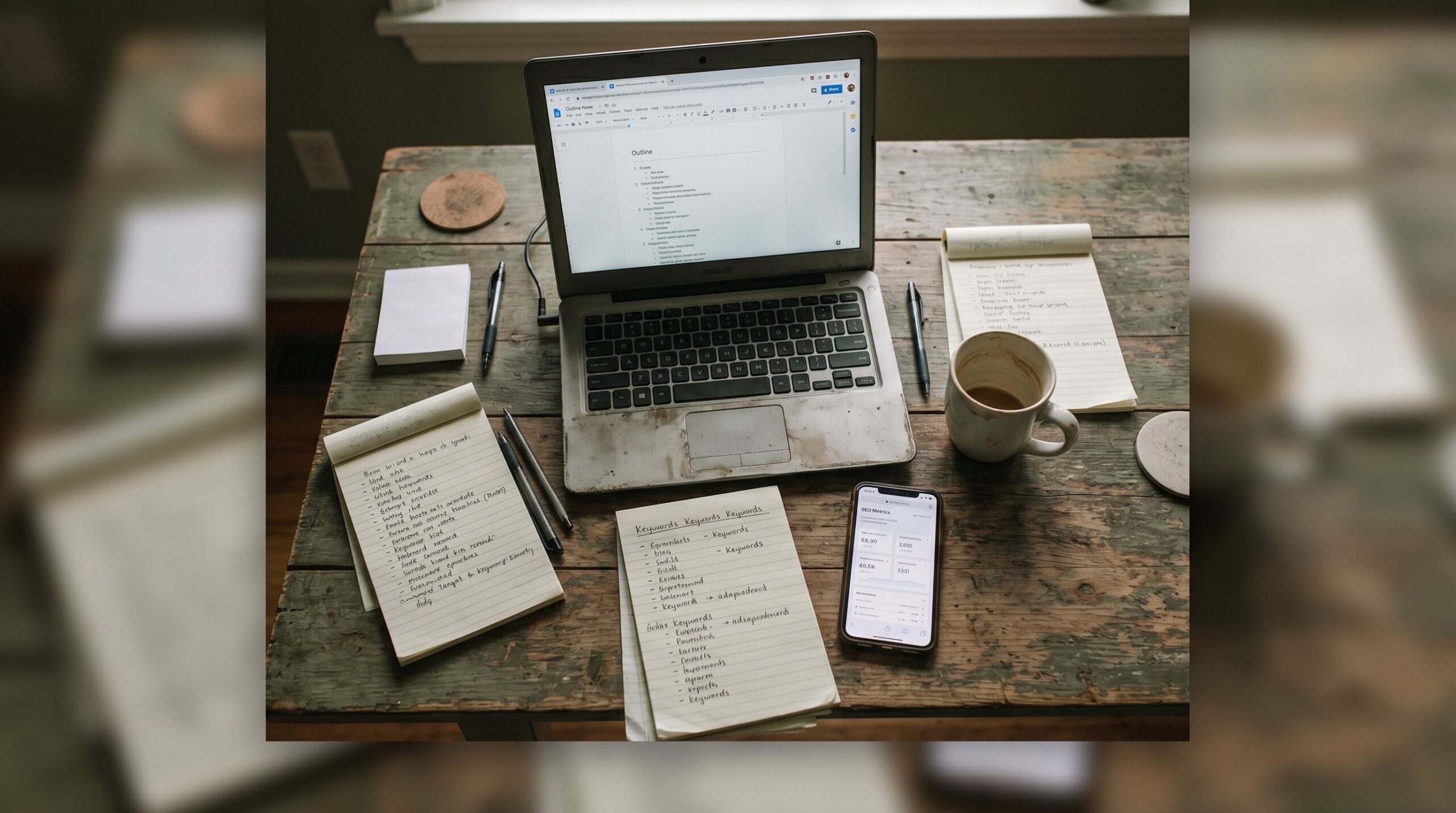
Stop wasting hours researching keywords and outlining blog posts. AI content brief generators now handle the heavy lifting, delivering data-driven SEO briefs in minutes instead of hours.
Last updated: 2026-05-05
Content teams that shipped five blog posts per month in 2023 are now publishing twenty. The difference isn’t caffeine or bigger budgets. It’s automated content briefs.
An SEO content brief is the blueprint your writers follow before they type a single sentence. It lists target keywords, competitor gaps, required headings, word count, and semantic terms that help Google understand your topic. A strong brief turns a blank page into a ranked article. A weak brief wastes writer time and produces content that sits on page three.
In 2026, AI-powered brief generators handle the research grunt work in seconds. They crawl the top ten SERP results, extract common headings, identify keyword clusters, and deliver a structured outline that your team can execute immediately. This guide walks you through what makes a great content brief, how AI brief tools work, and how to integrate automated briefs into your WordPress publishing workflow.
What Is an SEO Content Brief?
An SEO content brief is a document that tells your writer or AI agent exactly what to include in an article before they start drafting. It compiles keyword research, competitor analysis, and structural recommendations into one actionable reference. Strong briefs reduce revision cycles, improve time-to-publish, and increase the likelihood that the finished article ranks in the top five.
Traditional briefs live in Google Docs or Notion pages and take an SEO specialist one to two hours to assemble. They pull data from Ahrefs, review the top-ranking pages manually, and write a loose outline. AI brief generators compress that two-hour process into ninety seconds by automating SERP scraping, heading extraction, and keyword clustering.
The best briefs do not micromanage voice or sentence structure. They provide the scaffolding (headings, required terms, competitor gaps) and trust the writer or agent to fill in the prose. Think blueprint, not script.
Five Elements of a High-Performance Content Brief
Not every brief is useful. A list of keywords with no context wastes your writer’s time. A great brief includes five concrete sections that guide execution without constraining creativity.
1. Primary and Secondary Keywords
The main keyword (the query you want to rank for) plus three to five semantic variants. Include search volume and difficulty so your team can prioritize. Example: primary “AI content brief” (2,400/mo, KD 38), secondary “automated content brief”, “content brief generator”, “SEO brief tool”.
2. Suggested Heading Structure
An H2 outline extracted from the top five ranking pages. This is not a strict template. It shows what topics competitors cover and where gaps exist. Your writer can reorder, merge, or add sections, but the list ensures nothing critical gets skipped.
3. Competitor Content Gaps
What do the top results miss? Maybe none of them include a comparison table, or they skip a workflow example, or they ignore mobile optimization. Identifying gaps gives your article a differentiation angle and improves the odds of outranking.
4. Target Word Count and Reading Level
Average word count of the top five results plus or minus ten percent. If the top articles are 1,800 words, your brief should recommend 1,600 to 2,000. Reading level (Flesch-Kincaid grade) helps match tone to audience. B2B SaaS skews 10th to 12th grade; consumer how-tos target 8th grade.
5. Semantic Keyword List (NLP Terms)
Phrases and entities that Google expects to see in a comprehensive article on this topic. For “AI content brief,” the list might include “SERP analysis”, “keyword clustering”, “search intent”, “topic modeling”. These aren’t forced keyword stuffing. They signal topical coverage and help the article rank for related long-tail queries.
An AI brief generator pulls all five elements automatically. A human researcher pulls the same data manually, one tab at a time. The output quality is nearly identical; the time investment is not.
AI Brief Generation vs. Manual Research
Speed is the headline difference, but consistency and scalability matter just as much.
Manual brief creation works when you publish two articles per month and your SEO lead has ten hours to spare. It breaks down when you scale to weekly publishing or when junior writers join the team and need structured guidance. AI brief generators remove the bottleneck and standardize quality across every brief.
| Element | Manual Process | AI Brief Generator |
|---|---|---|
| Keyword Research | Open Ahrefs, export keywords, manually filter by relevance (15 min) | Auto-extracted from SERP in 10 seconds |
| Competitor Analysis | Open top 5 results in tabs, read each, note headings (30 min) | Scraped and summarized in 20 seconds |
| Heading Outline | Compile common H2s into a Google Doc, reorder by logic (20 min) | Suggested outline delivered instantly |
| NLP Terms | Use Surfer or Clearscope, export term list (10 min) | Extracted and ranked by relevance automatically |
| Total Time | 75–90 minutes per brief | 90 seconds per brief |
The time savings compound fast. A team publishing four articles per week saves roughly twenty hours per month by switching to automated briefs. That’s half a full-time hire reclaimed for strategy, distribution, or additional content production.
How to Use AI Content Briefs for WordPress Blogs

Most AI brief generators output a document or JSON file. The fastest WordPress teams skip the export step entirely and use platforms that generate the brief, draft the article, and publish directly to WordPress in one workflow.
Here’s the standard process when using a standalone brief tool:
Enter Your Target Keyword
Type the primary keyword you want to rank for. The tool pulls the top ten SERP results and begins analysis. Some platforms let you specify a target country or language for localized results.
Review the Auto-Generated Outline
The tool returns a suggested heading structure, keyword list, and recommended word count. Scan the outline for accuracy. If a heading feels off-topic or redundant, delete it. If a competitor covers a subtopic your outline skips, add it manually.
Export or Hand Off to Your Writer
Download the brief as a PDF or share a link. Your writer opens the brief, follows the structure, and drafts the article in Google Docs or directly in WordPress. The brief stays open in a second tab for reference.
Draft, Edit, Publish
The writer completes the first draft using the brief as a guide. An editor reviews for accuracy and voice. Once approved, the article is published to WordPress and indexed by Google within hours.
End-to-end platforms like AI content agents for WordPress collapse steps two through four into a single automated process. You approve the brief, the agent drafts the article, and the finished post appears in your WordPress dashboard ready for one-click publish. No handoff, no export, no copy-paste.
How to Evaluate AI Content Brief Generators
Not every AI brief tool is worth the subscription. The market is crowded with repackaged keyword scrapers that deliver shallow outlines with no competitive intelligence. Strong tools share four characteristics.
Real-Time SERP Analysis
The tool should scrape live Google results, not rely on a stale keyword database. SERP positions shift weekly. A brief generated from six-month-old data misses current ranking patterns and emerging subtopics.
Competitor Gap Identification
The best briefs do not just list what competitors wrote. They highlight what competitors missed. Look for tools that flag questions left unanswered, comparisons skipped, or examples absent from the top five results.
Semantic Keyword Extraction
A keyword list is useless if it only repeats the primary term. Strong tools use NLP models to extract related entities, synonyms, and long-tail variations that signal topical depth to search engines. These terms improve your chances of ranking for dozens of related queries beyond the primary keyword.
Integration with Your Publishing Stack
Downloading a PDF and emailing it to your writer adds friction. The fastest workflows connect the brief tool directly to WordPress, Google Docs, or your project management system. One-click handoff keeps the pipeline moving.
Run a test with your top-performing keyword. Generate a brief using the tool and compare it to a manual brief you’d create yourself. If the AI version misses critical headings or suggests irrelevant keywords, skip it. If the AI brief matches or exceeds your manual version, calculate how much time you’d save at scale and sign up.
Frequently Asked Questions
What is your hidden gem AI tool?
For teams publishing on WordPress, AI content agents that generate briefs and drafts inside the same workflow are the hidden gem most marketers overlook. Instead of juggling separate tools for keyword research, brief creation, drafting, and publishing, a single platform handles the full pipeline. You approve a brief, the agent writes the article, and the finished post appears in your WordPress dashboard ready to publish. This eliminates the handoff delays and version-control chaos that slow down multi-tool workflows.
How do I write a good meta description?
A strong meta description is 120 to 160 characters, opens with a clear benefit, and ends with a soft call to action. Skip generic phrases like “Learn more about” or “This article covers.” Instead, lead with the outcome: “Cut content research time from two hours to two minutes with AI brief generators that deliver keyword lists, competitor gaps, and structured outlines instantly.” The best descriptions answer the searcher’s question in one sentence and make clicking feel inevitable.
What’s the best hidden gem you have found so far?
The best hidden gem in content automation is not a single tool but a workflow shift: moving from manual brief creation to agent-driven publishing. Most teams still treat AI as a research assistant that hands off data to humans. The real leverage comes when the AI generates the brief, writes the draft, optimizes on-page SEO, and pushes the finished article to WordPress without human intervention. That end-to-end automation is what separates teams publishing five articles per month from teams publishing twenty.
Stop Writing Briefs. Start Publishing.
DeltaLoop generates SEO-optimized content briefs, drafts articles, and publishes directly to your WordPress site. No exports, no handoffs, no delays.
Start Your Free Trial